Platform

The complete security operation on a single platform.

CyberVision executes the full vulnerability management cycle: it identifies the assets in the environment, detects the applicable flaws, ranks each risk by business impact, and drives remediation through to evidence of mitigation. The technical analysis is performed by artificial intelligence.

Interfaces

Five interfaces, in the order they are used.

Context is preserved between them: scan results produce the risk queue, the queue produces the remediation plan, and the plan produces the executive report.

01 — Command center

Consolidated position in a single reading.

Security index, monitored fronts, volume of risks requiring action, and the order of priority determined by artificial intelligence analysis. In steady-state operation this is the only interface requiring daily attention.

Outcome: security information presentable to the board without technical translation.
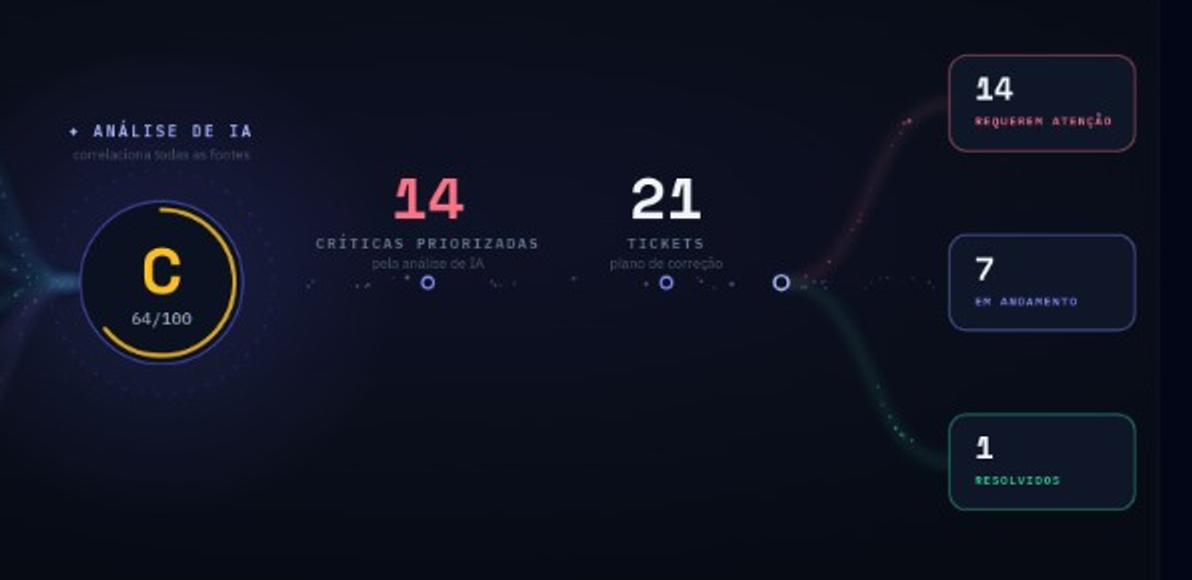
CyberVision — command center
Security index of 64/100, 14 critical vulnerabilities prioritized by AI analysis, and 21 tickets in the remediation plan

02 — AI assistant

Specialized tasks executed in natural language.

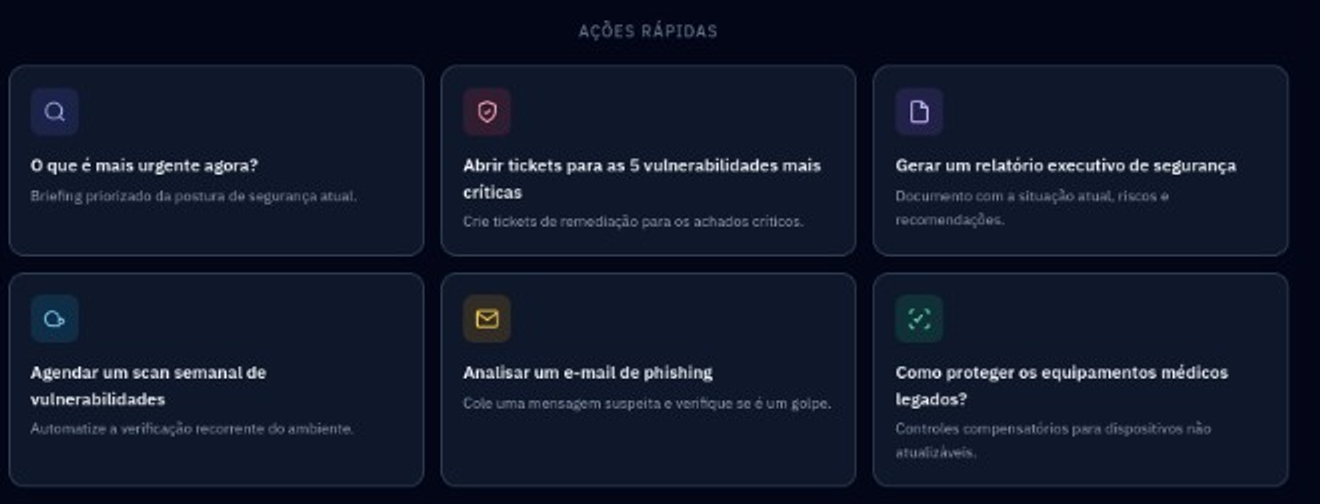
Assessment of urgent items, ticket creation for the highest-severity vulnerabilities, executive reporting, scheduling of recurring scans, and verification of suspicious messages. The highest-frequency operations remain available on the opening interface.

Outcome: security operations without dependence on prior technical knowledge.

CyberVision — AI assistant
AI assistant actions: urgency assessment, ticket creation, executive report, scan scheduling, and phishing verification

03 — Scanning

Verification executed with auditable progress.

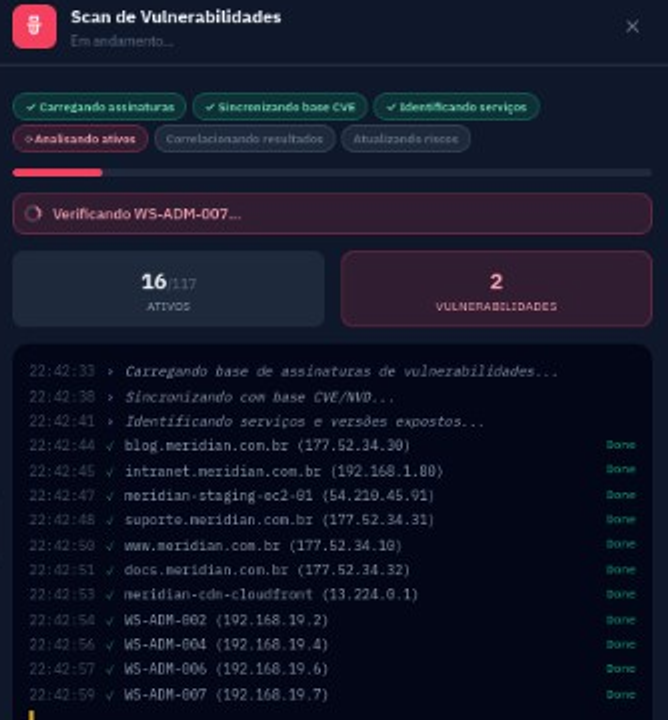
The natural-language instruction is converted into a scan by artificial intelligence. The panel presents the assets already verified, the vulnerabilities identified, and a chronological record of each analysis step.

Outcome: on-demand scanning without configuring a technical job.

CyberVision — scan in progress
Scan panel showing 16 of 117 assets verified, 2 vulnerabilities found, and a chronological log of analyzed assets

04 — Risk management

An ordered and traceable remediation plan.

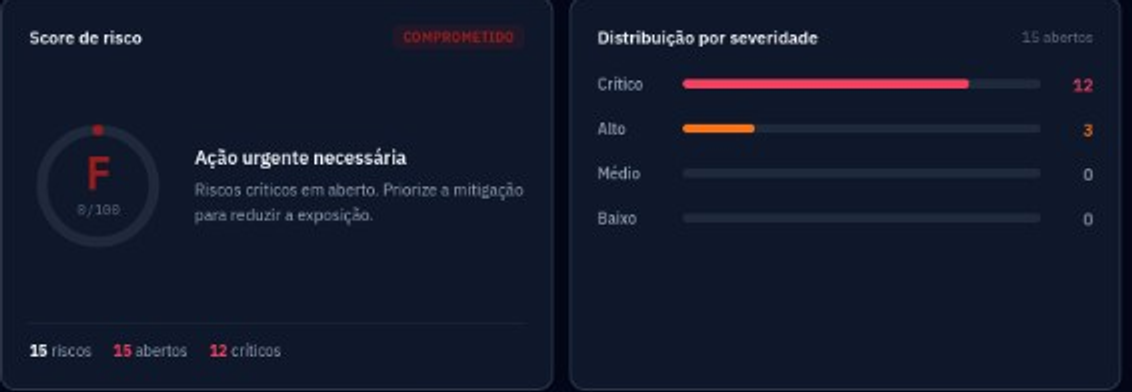
Risk score, severity distribution, and an impact-versus-likelihood matrix. Each record presents the asset, the category, the status, and the percentage of mitigation executed, making stalled items and elapsed time evident.

Outcome: prioritization criteria documented and defensible under audit.

CyberVision — risk analysis
Risk score, severity distribution, and impact-versus-likelihood matrix

05 — Reporting

Documentation issued from operational data.

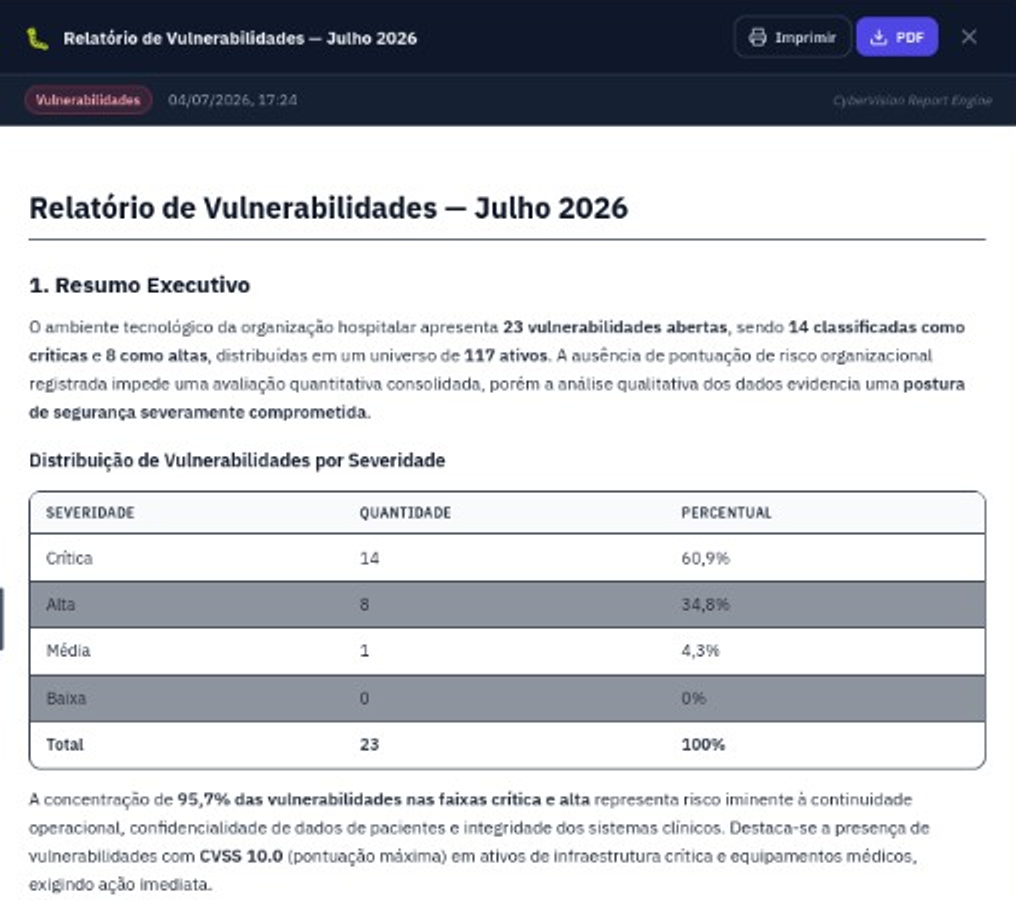
Executive report, vulnerability report, and mitigation plan generated from consolidated data, with an executive summary, severity distribution, and recommendations. PDF export allows direct attachment to audit processes.

Outcome: responses to security questionnaires without manual preparation.

CyberVision — reporting
Vulnerability report with executive summary and severity distribution in a table

Coverage

Available monitoring fronts.

The applicable combination is determined by the contracted plan and the scope recorded during implementation.

Internal network

Discovery and continuous monitoring of servers, workstations, and devices connected to the corporate network, with an inventory of the assets actually present.

External network

Mapping of the internet-facing surface: reachable ports, published services, and entry points visible from outside the perimeter.

Vulnerability scanner

Continuous verification of known flaws in operating systems and applications, with the corresponding public identifier and the fix applicable to each case.

WebApp Security

Assessment of sites, portals, and web applications against the flaw categories with the highest incidence of exploitation in production.

Cloud Security Agent

Audit of cloud resource configuration: permissions granted beyond need, storage without access restriction, and unprotected backup routines.

DeepWeb Scanner

Identification of corporate credentials and data circulating in restricted forums and marketplaces.

Operation

Effort required from the organization.

A realistic assessment of the operational load placed on the client at each phase.

Implementation

A thirty-minute session to define scope and grant the necessary access. There is no server installation and no phased rollout project.

Ongoing operation

Review of the priority list on the opening interface. The function is customarily performed by the existing IT lead, without dedicated headcount.

Handling a critical risk

The item is elevated in the queue with the corresponding remediation instruction. Where internal execution capacity is absent, the Managed plan provides a CyberSeven analyst.

Scope of operation

Definition of what the platform does not perform.

Recording these boundaries forms part of the commercial proposal and prevents divergence of expectation during operation.

Environment changes without authorization

The platform identifies, classifies, and instructs. Executing changes in the client environment depends on formal approval and on the automation scope expressly authorized.

Replacement of the backup policy

Monitoring exposure does not guarantee recovery capability. Maintaining tested backups remains an obligation of the organization; the platform flags when they are unprotected.

Real-time endpoint protection

The platform does not operate as antivirus on the workstation. Its function precedes that stage: reducing the surface available for exploitation.

Issuing certification

The platform organises evidence and issues documentation for audits and client questionnaires. Certification is the exclusive attribution of an accredited certifying body.

Establish your current exposure.

The evaluation runs against the organization’s real environment and delivers the initial security index and the prioritized risk queue within the first week.